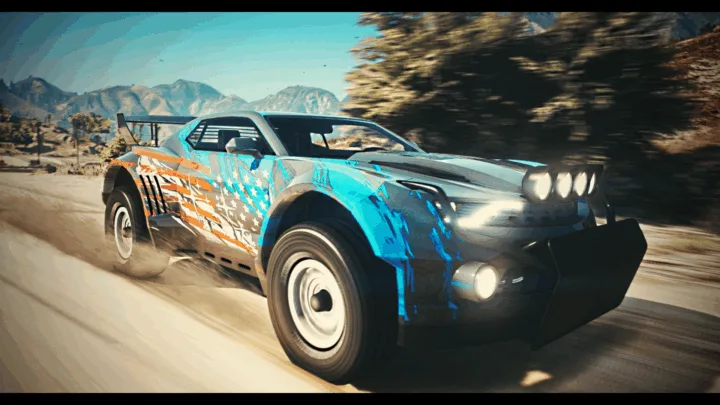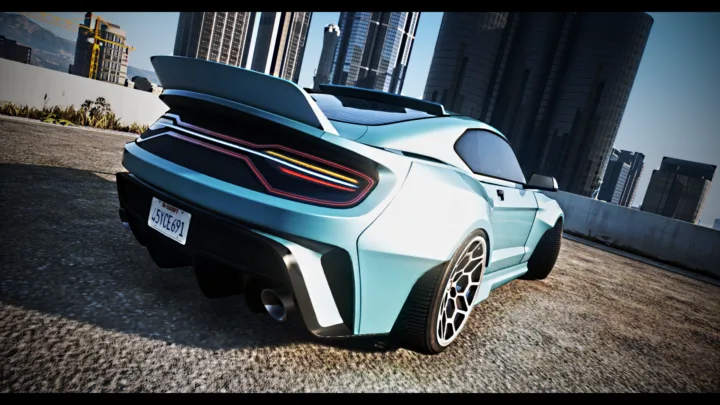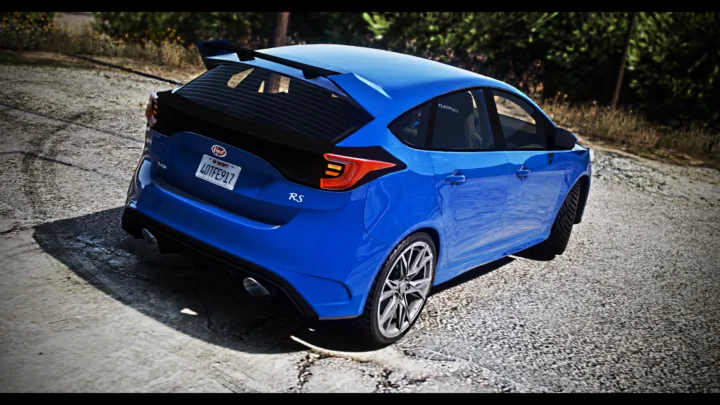
A car meet lives or dies on the details you clock from three feet away - the rim fill, the ride height, the way an arch sits over the tyre. FiveM wheels are where most builds either come together or fall apart, because the game's rim system, your suspension tuning, and a stancer script all fight for control of the same four corners. Get them agreeing and a stock Sultan reads like a proper build. Get them arguing and you've got wheels floating inside the fenders on a car that beaches on the first driveway.
How GTA V's wheel system works in FiveM
FiveM wheels are the rim models GTA V loads through vehicle mod slot 23. The engine sorts them into categories - sport, muscle, lowrider, SUV, offroad, tuner, Benny's Originals, Benny's Bespoke and open wheel - and each vehicle only offers the rims authored for its class, so a lowrider rim won't show up on an open-wheel spawn.
Under the hood a script sets two things. SetVehicleWheelType picks the category, then SetVehicleMod(vehicle, 23, index) picks the specific rim, where -1 is the stock wheel and the ceiling is GetNumVehicleMods(vehicle, 23) - 1. Call SetVehicleModKit(vehicle, 0) first or none of it takes. On ESX that whole dance is wrapped by SetVehicleProperties, which carries wheels (the type) and modFrontWheels (the index); bikes get modRearWheels for the back.
Those categories gate which rims a car can wear. Benny's Originals and Bespoke are their own types because Rockstar authored those rims and tyre profiles for the Benny's cars specifically - which is why bolting them onto a random import clips or sits wrong.
Modkit rims vs streamed wheel packs
Two different things get called "fivem wheels" and they behave differently. Stock modkit rims ship inside the base game's carcols and mod data - no streaming cost, universally synced, limited selection. Streamed wheel packs are custom rims you drop into a resource: a .yft mesh per rim plus a .ytd texture dictionary, wired into a vehicle's modkit so they appear in the tuning menu alongside the stock options.
Streamed packs give you the JDM and euro rims the base game never shipped, but every rim you add is memory you spend and a mesh the client has to draw - a trade-off that runs through the rest of this piece.
Stance: handling.meta vs stancer scripts
There are two roads to a slammed car, and they are not the same road. One edits the vehicle's real suspension in handling.meta; the other transforms the wheel bones live with a script. Most servers end up running both, for different jobs.
| | handling.meta lowering | Stancer script |
|---|---|---|
| What changes | real suspension geometry (fSuspensionRaise, travel limits) | wheel-bone transform only (X offset, Y rotation) |
| Who sees it | everyone, baked into every spawn of that model | per-vehicle, live, synced via decorators if the script supports it |
| Physics | changes ride height, ground clearance, handling | cosmetic; grip and collision stay stock |
| Editable in-game | no - needs a resource restart or model edit | yes, from a menu |
| Best for | a fleet-wide baseline stance | individual owner builds at meets |
Lowering in handling.meta means fSuspensionRaise (the visual ride-height offset) plus the travel limits fSuspensionUpperLimit / fSuspensionLowerLimit and the force and damping values. Drop fSuspensionRaise and the body sits down over real, physical suspension - ground clearance actually changes, and so does how the car takes a kerb. The catch: it's baked into every spawn of the model for every player, so it's a fleet-level decision, and you need a replace or addon you control to touch it.
Stancer scripts, camber and track width
Stancer menus - VStancer and the wave of scripts descended from it - do something completely different. They never touch handling. They move the wheel bones every tick. Track width is the X offset of the wheel bone in the vehicle's local space; camber is the Y rotation of that same bone. That's the whole trick. The car looks aggressive while the physics collider underneath stays stock, and because GTA doesn't simulate camber thrust, none of it changes grip. It's pure show.
Sync is the part people forget. The well-built stancers broadcast edits with decorators, so everyone in range - on OneSync, effectively the whole session near you - sees the same stance, and the edit re-applies when the car streams back in. A client-only wheel tweak syncs to nobody, reads as stock to everyone else, and can trip anticheat. If you're weighing options, the FiveM script comparisons at xdopestore are a decent way to see which stancers actually sync versus which only edit your local view.
One field note worth the trouble: a stancer saves the current wheel state as its "default," so if you build a preset on a damaged car it stores bent geometry. Repair first, then save.
Fitment problems that wreck a build
Stance and rims collide - sometimes literally. Four failures show up over and over:
- Clipping and floating. Too much negative offset, or a too-wide streamed rim, and the tyre pokes through the arch. Too much positive offset and the wheel sinks inboard until it floats in the well. Track width corrects both, but only within reason.
- Scrape height that kills driveability. A car dropped past the point its stock collision model agrees with will catch its bumper on kerbs, beach on driveways, and grind on ground the mesh thinks is flat. Slammed looks great parked and terrible in a pursuit.
- Broken LODs on swapped wheels. Plenty of ripped or lazy wheel packs ship only the high-detail mesh. At distance the rim pops to a fallback, flickers, or vanishes outright - the classic "why do that guy's wheels disappear" complaint.
- Fill that doesn't match the arch. Wide arches over stock-width track look empty; stock arches over aggressive fitment rub. Wheels and body get dialled together, which is exactly why wide-body is its own problem.
YFT meshes and poly budget at a packed meet
Rims are sneaky-expensive. A clean rim mesh is maybe 10-20k triangles; a show-off floating-spoke rim with modelled brake calipers can push 60k each. Four corners, fifteen cars idling in a parking garage, and you've quietly added millions of triangles plus a texture dictionary per rim into VRAM. That's most of what people mean when a meet "lags."
If you host meets, spec lean rims the way you'd spec any streamed asset - check the .yft poly count and .ytd resolution before it goes on the server, not after resmon spikes. cfxassets-tebex.io is where I pull optimised rim textures and liveries when a pack ships 4K YTDs on rims nobody photographs up close.
Wide-body kits: mod slot or separate body?
A wide-body kit reaches FiveM one of two ways. As a modkit mod, the arches and fenders are authored onto bodywork slots in the vehicle's carcols and modkit, so one spawn name toggles narrow or wide from the tuning menu. As a separate body variant, the wide car is a whole different .yft model with its own spawn name.
Modkit wide-body is cleaner to manage - one model, one entry, players build it in-game - and it keeps your spawn list short. Separate variants can carry crisper meshes but double the streaming footprint and split your garage across two names. Either way, a wide-body only reads right when the track width fills the new arches - one that ships without matching wheel offset or stancer support is half a kit.
Buying tuner-ready cars: what real depth looks like
"Tuner-ready" gets stamped on a lot of cars that have a modkit ID declared and about three working mods behind it. Before you buy, check for actual depth:
- Working mod slots, counted. Front and rear bumpers, skirts, spoilers, hoods, roll cages, exhausts - not just listed in the description, actually toggling in-game.
- Wheel compatibility. Does it accept aftermarket wheel types or only stock? Is there a proper wheel bone so a stancer can grab it? Do the arches clear common rims?
- Benny's-style interior and liveries. A tuned interior variant, paintable or template liveries, and working extras (
extra_1onward) for spoilers and accessories separate a real build platform from a static model. - LODs and collision present.
_hi,lod,lod2and a real.col- the fitment and scrape problems above usually trace straight back to a car shipped without them. - Escrow vs open source. Escrowed, you can't fix ride height or offset yourself; open, you can tune
fSuspensionRaiseand the arches to match your wheels. For a build platform, open pays off. - resmon and stream size. A pack streaming 4K textures on every panel eats memory whether or not anyone's looking at it.
For the buying side of that checklist, the buying guides at buy-tebex.io go deeper on escrow and vendor vetting, and cars-tebex.io carries the handling and suspension reference if you plan to tune what you buy.
Policing stance so meets and pursuits coexist
The car-meet crowd wants wheels out and cars on the floor. The cops-and-robbers crowd wants vehicles that can actually make it through a chase. Both live on one server if you set limits instead of hoping.
- Cap the stancer. Set sane max values for track width and camber in the script config so nobody rolls up with wheels-out-sideways cursed geometry.
- Gate it by permission or zone. Ace-perm or job-lock the stancer, or only enable it inside meet areas, so patrol and response vehicles stay driveable.
- Whitelist the packs you actually stream. Server-side rims sync; client-side wheel mods don't, and they invite desync and anticheat noise.
- Keep response fleets sane. A slammed patrol car that grounds out on every kerb is a liability - hold police and EMS vehicles to a stance floor.
Wheels, stance and fitment are the gap between a car that photographs well and a car that plays well. The build that does both respects the poly budget, syncs its stance, and keeps enough clearance to make it out of the parking garage.
FAQ
What are FiveM wheels?
FiveM wheels are the rim models GTA V applies through vehicle mod slot 23, sorted into categories like sport, muscle, lowrider, tuner, Benny's and open wheel. They can be the game's stock rims or custom streamed wheel packs added as .yft mesh and .ytd texture files.
Do stancer scripts change how a car drives?
No. Stancers move the wheel bones - track width and camber - for looks only. The physics collider stays stock and GTA doesn't simulate camber, so grip is unchanged. Ride height that affects driving comes from handling.meta, not a stancer.
Why do my custom wheels disappear at a distance?
Almost always missing LODs. Many wheel packs ship only the high-detail mesh, so the game has nothing to draw at range and the rim pops to a fallback or vanishes. Use packs that include proper LOD meshes.
Do stance edits sync to other players?
Only if the script broadcasts them. Good stancers use decorators, which work with OneSync, so everyone nearby sees the same stance. A client-side-only wheel edit shows stock to everyone else and can flag anticheat.