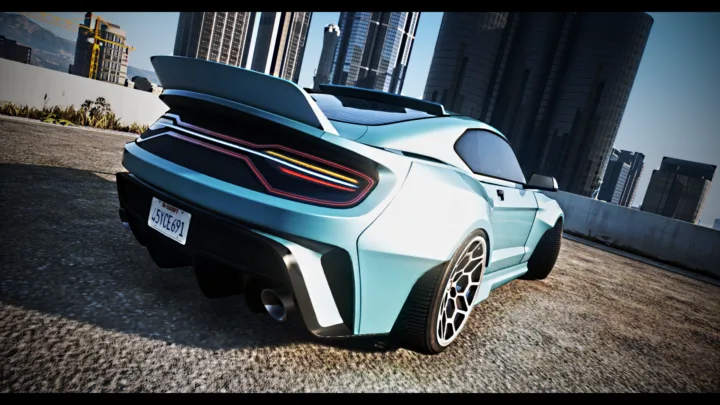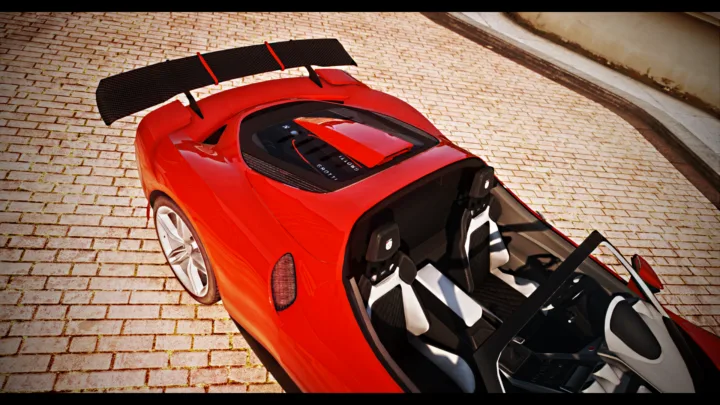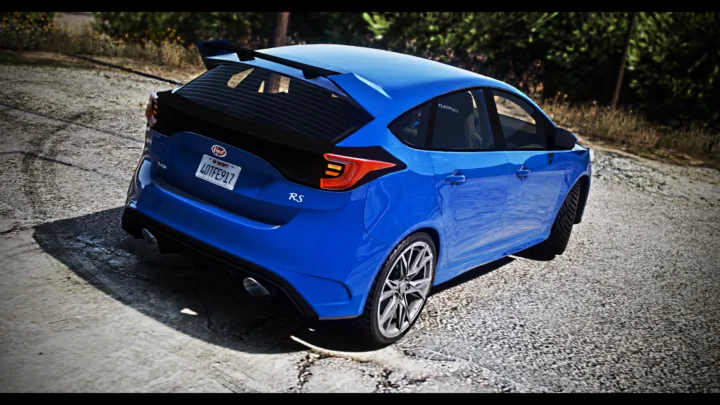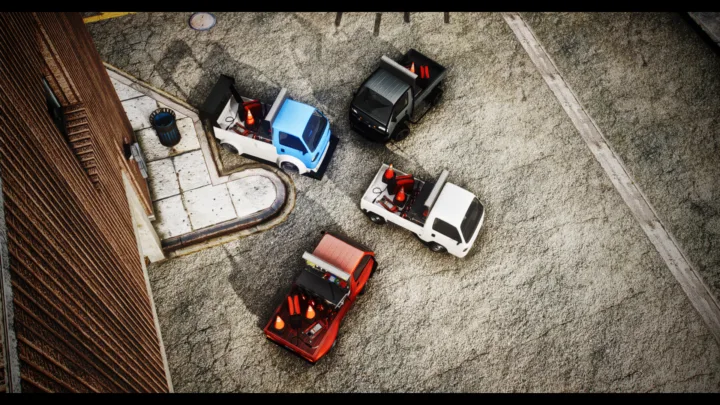
Friday night at the docks, twenty lowered coupes idling in a circle while somebody argues about whether the exhaust flames are too orange. Meanwhile, six people have quietly vanished. They left forty minutes ago in a convoy of mud-caked pickups, they are somewhere on the back side of Mount Chiliad, and at least one of them is on his roof in a ditch he swears was not there last week. That is FiveM off-road in one photograph.
It runs on different rules from the racing crowd. Nobody is chasing a lap time. The measure of a good night is whether everyone got back down, and the answer is allowed to be no. This post covers the pickups and 4x4s worth stocking, the suspension and tyre settings that decide whether a truck feels planted or feels like a shopping trolley, four trail routes across Blaine County that hold up in multiplayer, the recovery gear that turns a stuck vehicle into content instead of a disconnect, and the events you can run that are not races.
Why FiveM off-road builds behave differently from your street cars
A tuner build is judged on tarmac, which is a narrow enough problem that most handling work comes down to grip and gear ratios. An off-road truck is judged on surfaces you did not author: dirt, gravel, wet rock, and the loose silt on the Zancudo bed that behaves like nothing else in the map.
That changes what "good" means. A truck that runs a fast quarter mile and then bottoms out on the first washout is a bad truck. A slow, tall, softly sprung thing that climbs anything you point it at is a good one, even though on paper it loses to a hatchback.
The other difference is social. Racing is competitive by construction, off-road is cooperative by necessity, because the moment somebody rolls the night becomes a group problem. Servers that understand that build the feature set around the recovery rather than the driving.
The pickups and 4x4s worth actually owning
You do not need thirty trucks. You need six that feel different from each other, and the vanilla catalogue plus a few good adds covers it.
The Sandking is the default answer and deserves it: tall, heavy, absurd wheel travel, forgiving of the driving that off-road nights actually produce. The short wheelbase version is better on tight switchbacks and worse at everything else. The Bison is the workhorse, less capable off pavement and much better on the drive out, which matters more than people admit when the trailhead is thirty minutes away down the Senora Freeway. The Kamacho sits between the two in temperament and handles rock better than either.
Then there is the Rebel, specifically the rusty one, which is the character vehicle of the entire scene. Slow, scruffy, and the truck people keep long after they can afford better. The Everon is the comfortable option, fast enough on road to be a daily and capable enough off it to keep up, which makes it the truck people buy second. The Brawler is short, wide, silly and genuinely good in the ruts, and terrible on the highway, and nobody cares. The Yosemite sells the lifted classic pickup look to people who want the build rather than the capability.
Keep a Blazer around too. Not a truck at all, but every group ends up scouting a line on a quad before committing a full sized 4x4 to it.
Stock them as a small curated group rather than a wall. Off-road buyers pick one truck and live in it for months, so depth beats breadth every time.
Suspension and tyres: the handling lines that decide the night
Most disappointing off-road trucks fail the same way. Somebody raised the model, fitted big wheels and left the suspension values alone, so it looks lifted and drives like a lowered car in a hat.
The fields that actually matter live in handling.meta, and a small number of them do most of the work:
<fSuspensionForce value="2.400000" />
<fSuspensionCompDamp value="1.300000" />
<fSuspensionReboundDamp value="1.800000" />
<fSuspensionUpperLimit value="0.200000" />
<fSuspensionLowerLimit value="-0.250000" />
<fSuspensionRaise value="0.100000" />
<fSuspensionBiasFront value="0.480000" />
<fTractionCurveMax value="2.150000" />
<fTractionCurveMin value="1.900000" />
<fTractionLossMult value="0.750000" />
<fLowSpeedTractionLossMult value="0.900000" />
<fRollCentreHeightFront value="0.150000" />
<fRollCentreHeightRear value="0.150000" />
The upper and lower limits are the travel, and travel is the whole game. Widen the gap and the truck absorbs terrain instead of being launched by it. The damping values control how it settles afterwards, and the classic mistake is soft rebound, which gives you a vehicle that pogos off a rock and lands on its lid.
fTractionLossMult is the dirt dial. Push it up and the truck slides on loose surfaces, which feels right up to a point and then feels broken. Keep it under one for anything you want people to enjoy driving for four hours.
Raise the roll centre when you raise the body. A tall truck with a low roll centre rolls over at speeds that make no sense to the person driving it, and they will report it as a bug because from the driver's seat it is one.
Tyres are half aesthetic and half physics. Wheel size sells the build, but the grip comes from the traction curve, so keep the two in agreement. A truck on mud terrains that grips like slicks reads as fake immediately. If players can change wheels and suspension in game rather than only at purchase, run it through a workshop rather than a menu, because a mechanic shop where the modification actually happens turns a stats change into a scene.
Trail runs across Blaine County that people come back for
A trail run is a convoy with a route and a pace, and the pace is what people get wrong. Four hours is normal. Nobody is in a hurry.
The north approach to Mount Chiliad is the obvious route and still the best. Climb the fire roads, stop at the top, take photographs nobody will look at, then descend the far side, which is where the actual difficulty lives. Downhill separates the drivers from the people who merely own the fastest truck.
Raton Canyon is the most photogenic drive in the game and it punishes anything with no ground clearance. Run the river route upstream so the crossings get harder as the group warms up rather than the reverse.
The Zancudo river bed is wide, flat, loose and fast, and it is where the convoy spreads out and everybody drives like an idiot for ten minutes. Put it in on purpose after something technical, because a group that has been crawling over rocks for an hour needs to go sideways for a bit.
Grapeseed to Paleto on dirt only is the connective challenge: get from one town to the other without touching pavement, on farm tracks and fire roads. It is more a route finding puzzle than a driving one, and it is the run new people enjoy most, because getting lost is the point.
Post the route beforehand so people bring the right truck, and set a turnaround time. Convoys with no stated end time do not end, they decay, one disconnect at a time.
Recovery gear, or how to stop the night ending in a ditch
The moment somebody is stuck, one of two things happens. Either the server has recovery tools and the next twenty minutes are the best part of the evening, or it does not, and the player respawns their truck at a garage and quietly logs off.
Winches, tow straps and a snatch block are the difference, and even a simple implementation carries it. Underneath it you need reliable detection of a stuck vehicle, which the engine will tell you if you ask:
local ROOF, SIDE, HUNG = 0, 1, 2

CreateThread(function()
    while true do
        Wait(1000)
        local ped = PlayerPedId()
        local veh = GetVehiclePedIsIn(ped, false)

        if veh ~= 0 and GetPedInVehicleSeat(veh, -1) == ped then
            for _, kind in ipairs({ ROOF, SIDE, HUNG }) do
                if IsVehicleStuckTimerUp(veh, kind, 8000) then
                    TriggerEvent('offroad:stuck', VehToNet(veh), kind)
                    ResetVehicleStuckTimer(veh, kind)
                end
            end
        end
    end
end)
Eight seconds is a fair threshold. Shorter fires on every awkward moment, longer and the player has already given up.
What you do with the event is the design decision. An instant flip is the lazy answer and it kills the thing that makes these nights memorable. Allow the flip only when nobody else is within a few hundred metres, otherwise route it to whoever is nearest with a winch. That keeps recovery social without stranding the person who went out alone at three in the morning.
Two small things pay off well beyond their effort. Give players a way to carry a spare, so a puncture two hours into Raton Canyon is a story rather than an ending. And make the recovery vehicles worth owning, so whoever turns up with the flatbed is a valued member of the convoy and not a taxi.
Events that are not races
The FiveM off-road calendar never sees a start line.
A trial is a low speed obstacle course scored on penalties. Touch a marker, points. Reverse, points. Winch out, points. Lowest score wins. It is the purest test of a build and takes an hour to set up with props.
A hill climb is timed but not head to head, which keeps it civil. One truck on the hill, everybody else watching from the top.
A poker run sends the convoy between five checkpoints across Blaine County, collecting a card at each, best hand wins. Driving skill is irrelevant, which is why it fills up.
A recovery callout night runs like a job. Somebody is stuck, a crew goes and gets them. If your server already has hauling and delivery work this slots straight into it, and the overlap with servers built around trucking and logistics work is large enough that the same players tend to enjoy both.
Overlanding is the one that sounds boring and is not. A convoy sets out for a destination two hours away and camps at the end. No scoring, no clock. It is the event that produces the screenshots your server gets known for.
The morning after: persistence, damage and repairs
FiveM off-road punishes vehicle systems in ways street driving does not, and it exposes weak persistence immediately. A truck that comes back from Mount Chiliad with a cracked windscreen and a bent bumper, then loads clean the next day, tells the player nothing they did mattered. Damage that survives a relog is what makes the build feel like theirs, so your storage layer has to hold body and engine health, not just the model and the plate. If you have not looked closely at how vehicles keep their state between sessions, fix that before adding another truck to the catalogue.
Repairs should cost something and happen somewhere. A mechanic who fixes anything instantly anywhere removes the consequence that made the trail run interesting. A shop with opening hours, a queue and a bill gives the damage weight, and gives the people who run the shop a reason to be online.
The short version
Stock a small group of trucks that feel genuinely different rather than a wall of lifted pickups. Spend the tuning time on suspension travel and traction loss, because that is where a 4x4 either feels alive or feels like scenery. Publish the route and a turnaround time before the night starts. Put real recovery gear in players' hands and resist making it instant, since the ditch is the content. Then let the damage stick until somebody pays to fix it.
Do that and the six people who disappear on Friday night come back with a better story than the twenty at the docks, which is the only lap time that matters out there. The one on his roof still says the ditch moved.