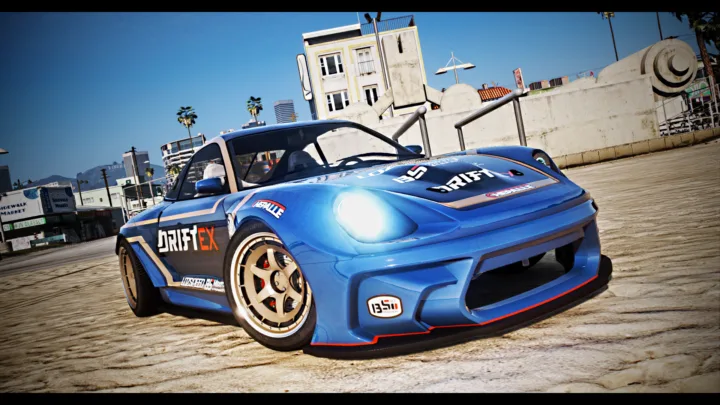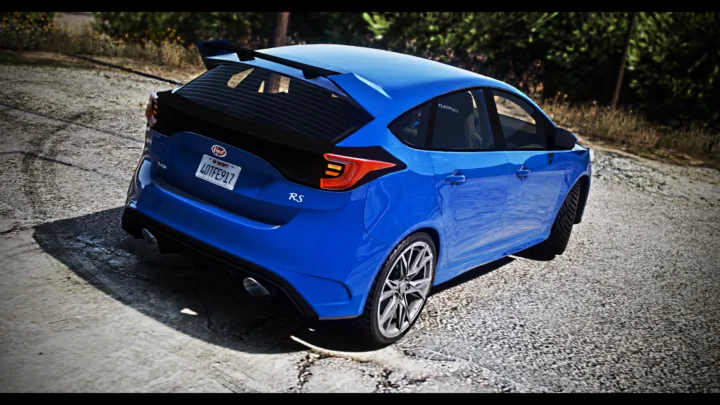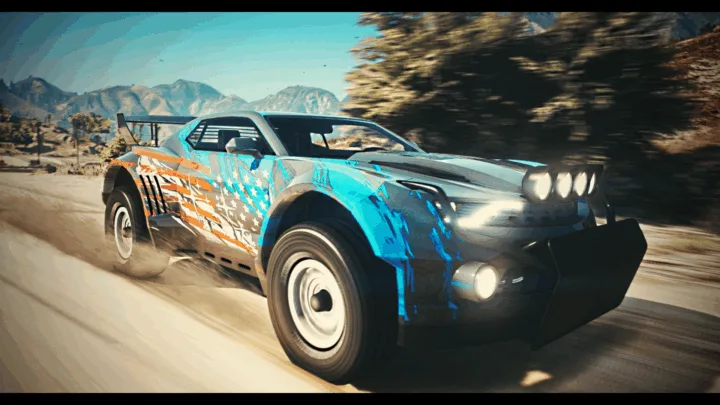
Hop between five different ESX cities on a Saturday night and you will see the same car park five times. A Sultan RS with a spoiler. A Kuruma that somebody calls a BMW. An Elegy in matte black. One drift build that has been renamed on every server it has ever appeared on, still carrying the same livery of a sponsor that does not exist. Different maps, different rules, different Discords, identical streets.
The cars on a server are its most visible decision and usually its least deliberate one. Almost nobody sits down and chooses a fleet. They install a dealership resource, keep its default list, add two packs somebody recommended, and that is the city's character settled for a year. So here is where the sameness comes from, and what curating a fleet on purpose actually involves.
The default list nobody edits
Most dealership and vehicle shop resources ship with a config full of vehicles so the thing works out of the box. That config is written by one author, once, usually from the vanilla list plus whatever was popular the year it was published.
Then it gets copied. Server packs bundle it. Tutorials assume it. A new owner opens the file, sees three hundred lines of working configuration, and closes it again, because editing three hundred lines feels like work and the server needs to launch on Friday.
The same thing happens with packs. A handful of well made free packs have been installed on nearly every server in the scene, which is a compliment to the people who made them and a problem for anyone who wanted their city to look distinct.
Why it matters more than the spec sheet
Players do not remember handling numbers. They remember silhouettes. The car outside the pub, the one the police chase, the one that is always parked badly outside the mechanic. Those images are what people describe when they tell a friend what your server is like.
A generic fleet makes a city forgettable in a way that no amount of custom scripting fixes, because the cars are on screen constantly and the scripting is not. It also flattens roleplay: when every player can afford the same fast car by Tuesday, there is nothing to aspire to and nothing to lose.
Curation is three files and one decision
The decision first: what is this city's fleet about? An era, a region, a class of car, a deliberate mix. Anything you can say in one sentence works, because the sentence is what you check every future purchase against.
Then the mechanics, which are simpler than the decision.
The dealership config is where the list lives. Model name, category, price. Cutting this list is the single highest impact thing you can do, and it takes an evening.
Spawn and access rules decide who can have what. Job grades that unlock vehicles, garage restrictions, and any purchase gate you put in front of a category. A car that exists but must be earned is worth more to your server than a car everyone owns.
The price ladder is the part people get wrong by trying to be realistic. Real world prices make a city where everything cheap is boring and everything interesting is unreachable. Build three tiers instead: something almost anyone can own by the end of week one, something that takes a month of doing a job properly, and a small number of cars that are genuinely rare. Then price by how special the car should feel, not by what it costs in real life.
Add-on or replace, and what it does to your streets
Replace vehicles swap a vanilla model for a new one, so traffic and every existing script picks them up automatically. Add-on vehicles arrive as new models with new names and have to be referenced explicitly everywhere.
Both are fine. The difference for identity is that replacements change the whole city at once, including the cars driving themselves around the map, and add-ons change only what players deliberately buy. A server that wants a different feel on every street uses replacements. A server that wants a normal city with a handful of special cars uses add-ons and keeps the list short.
Mixing them without a plan is how you end up with a city where the ambient traffic is beautiful and the player cars are a bring and buy sale.
The size problem nobody mentions until it hurts
Every vehicle you add costs streaming memory, download size for new players, and a slice of your loading time. Three hundred cars in the dealership means a first join that takes long enough for people to go and do something else.
A tight fleet is not just an aesthetic choice. Twenty to forty well chosen vehicles usually beat three hundred, in performance, in join times, and in how the city reads. If you are browsing for additions, the vehicle listings worth comparing are the ones that tell you file size and whether the pack is optimised, because both are load bearing facts and only one of them is usually on the page.
Running the cull
The cull is easy to describe and slightly painful to do.
- Pull the list of vehicles players actually own from
owned_vehicles, grouped by model, and sort by count. - The long tail at the bottom, owned by nobody, comes out of the dealership. Leave existing owners alone, because taking a car off someone is how you make a nemesis.
- Anything duplicated in feel, keep the better model, drop the other.
- Anything that does not fit the one sentence, drop it however much you like it.
- Keep one or two halo cars, priced so they take real effort.
Then rotate. Bringing three cars in and three out every season gives players something to talk about, which is three hours of work producing more engagement than most script purchases.
Emergency vehicles are a separate fleet decision
Police and ambulance vehicles do not belong in the dealership conversation at all, and treating them as part of the same list is how servers end up with a police force driving eleven different cars.
Job vehicles are gated on job and grade rather than on money, which means the design question is different. You are not asking what players will aspire to, you are asking what a shift looks like. A small marked fleet with a clear hierarchy reads better than a garage full of options: a general response car, a van, something unmarked, and one or two vehicles behind a senior grade.
Three things that go wrong here more than anywhere else:
Too much choice. When every officer picks a different car, the force has no visual identity and nobody can tell at a glance who is responding. Restriction is the feature.
Lighting inconsistency. Mixing vehicles with different lighting setups produces a convoy that flashes in three different styles. Pick one approach and keep the fleet on it.
Liveries that do not match the city. A pack with real world markings on a fictional city, or three different force names across one fleet, quietly undermines everything else your police team is doing.
The maintenance habit worth having: every time you add a job vehicle, add it to the grade restrictions in the same sitting. A vehicle that exists in the spawner but was never restricted is a vehicle every recruit will find within a day, and taking it back afterwards is a much worse conversation than never granting it.
Same principle as the civilian fleet, really. Fewer vehicles, chosen deliberately, arranged so that seeing one on the street tells you something. That is curation doing its job.
The dealership is an economy lever too
Vehicle prices are the largest money sink most ESX servers have. That makes the dealership the strongest tool you own for draining the money your paycheck loop keeps creating, and the easiest place to accidentally wreck your economy by pricing everything to sell.
If your city feels awash with cash, the fix is usually up there in the price ladder rather than in a salary config. Sinks beat cuts, because a sink gives the player something in exchange. If you want the dealership itself to be a player run business rather than a menu, that turns into a job with grades and a society account, and the walkthrough on how ESX jobs are structured covers the plumbing.
Practical takeaway
Write one sentence about what your fleet is. Cut the dealership list to what fits it. Build three price tiers by desirability rather than realism. Keep the total small enough to load fast, and rotate a few in and out each season so the streets change.
Do that and the car park screenshot from your server stops looking like the car park screenshot from everyone else's. Even if there is still a matte black Elegy in it, because there is always a matte black Elegy.