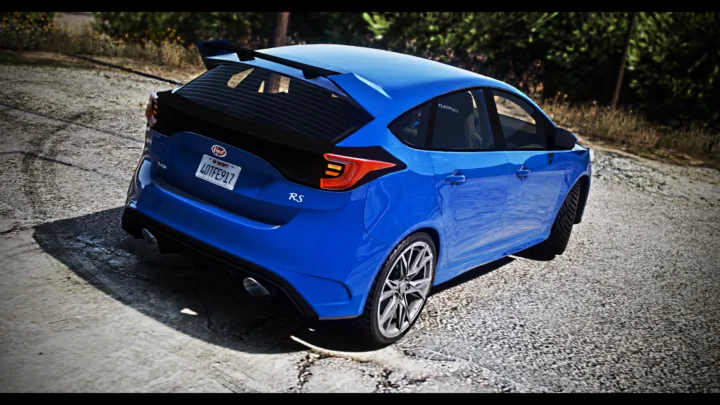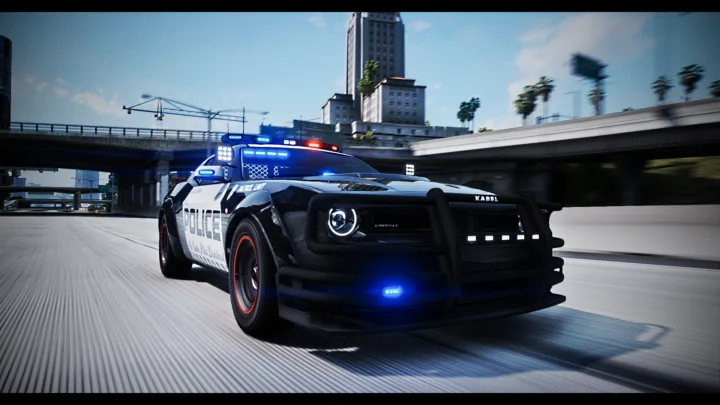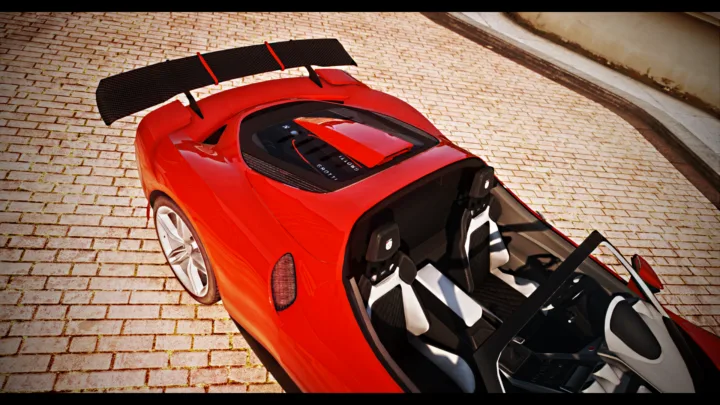
A tuner scene is not a folder of FiveM JDM cars dropped into [vehicles]. It's a set of shared references — which chassis mean something, which roads people run, who gets to wear the crew livery. Servers that buy 150 Japanese imports and stop there end up with a parking lot. Servers that pick 30 with intent end up with a culture players describe to their friends. Here's how the second one gets built, from chassis selection down to the import dealer's pricing sheet.
What makes FiveM JDM cars read as authentic
Authenticity comes from restraint and correctness, not horsepower figures. A pack reads as real when the chassis choices tell a coherent story, the drive side is genuinely converted, and the details a car person notices — fender mirrors, tucked bumpers, a roll cage that intersects nothing — are actually modelled.
Right-hand drive is where most "JDM" packs get caught. A real RHD conversion moves the seat bones inside the YFT, so the ped's hands land on the wheel and they step out onto the right kerb. A lazy one mirrors the dashboard mesh and leaves everything else alone. Two checks take ten seconds each:
- Sit in the car and press F to switch to first person. If the camera sits over the left seat,
povCameraOffsetinvehicles.metawas never touched — and neither were the seat dummies. - Get out. If your ped exits into traffic instead of onto the pavement, the
seat_dside_fbone is still on the left.
Fail either and you've bought a left-hand-drive car with a decal on the dash. On a server where half the fun is passenger-seat cruising and phone footage, that shows up constantly.
Mix eras, don't just buy the 1990s
The default import pack is twelve variations on a Skyline and a Supra. It looks impressive for a week and flat forever after, because every build converges on the same two silhouettes. A scene gets texture from era spread — the shakotan crowd and the time-attack crowd should not be able to buy the same car.
| Era | Real-world reference | What to look for in a model | GTA-universe analog |
|---|---|---|---|
| Kaido racer / grachan (70s–80s) | Kenmeri Skyline, Laurel, Celica LB | Deep front air dam, over-fenders, takeyari exhaust, fender mirrors, dish wheels | Karin 190z, Annis Savestra, Vulkar Warrener |
| 90s golden era | R32–R34, A80 Supra, FD RX-7, NSX, Evo, STI | Clean OEM+ bodies, period wing options, working pop-ups | Annis Elegy Retro, Dinka Jester Classic, Annis ZR350 |
| Kanjo / 2000s street (hatch era) | Civic EF/EG/EK, Integra DC2 | Roll cage, taped headlights, race numbers, gutted interior | Dinka Kanjo, Kanjo SJ |
| Modern time attack | GR86, FK8 Type R, MK5 Supra, 400Z | Big aero as separate mod slots, splitter, canards, centre-lock wheels | Dinka Sugoi, Dinka RT3000, Annis Euros |
Buy roughly evenly across those four rows and your car meets start looking like photographs instead of a dealership lot. It also spreads price tiers naturally — a beaten EG hatch and a built time-attack car should never cost the same in your economy.
Lore-friendly imports are the safe buy, and the marque map makes them easy
Cfx.re's ownership situation removed the ambiguity that servers used to hide behind: badged Nissan, Toyota and Honda models are trademark exposure, and enforcement waves have taken entire fleets off large servers overnight. Lore-friendly imports carry the same shapes with none of that risk, and they sit correctly in traffic and in dealership UIs.
The reason people resist is that they think lore-friendly means "generic". It doesn't — Rockstar built a full Japanese-marque hierarchy into the game world, and once you learn it, sourcing gets straightforward:
- Annis — the Nissan slot. Elegy, Euros, Remus, ZR350, Savestra.
- Dinka — the Honda slot, including the literal Kanjo (named after the Osaka loop racers).
- Karin — Toyota, plus the Subaru-flavoured Sultan line.
- Maibatsu — Mitsubishi territory, Penumbra and friends.
Write those four names into your dealership categories and your import scene has an in-world logic before a single player joins. Sourcing across those marques is a lot easier when you're working from a curated catalogue rather than forum links, which is most of what a store like cars-tebex.io is for.
Two crowds share the lot: stance and grip
Every tuner scene splits into people building for how the car looks parked and people building for how it behaves at the exit of a corner. Both are legitimate and they need different assets. The stance side wants fitment control, wheel choice and bodykits — territory I've covered elsewhere and won't re-teach here. The grip side wants aero that actually maps to separate mod slots, cage options, and handling files that reward throttle control.
Serve them badly and you get a lot of resentment. Serve them well and you get two rival social groups, which is far better content than one homogenous crowd.
Audio is the cheapest identity upgrade for both. Engine note does more for perceived quality than another 200 polygons on a bumper. A proper sound pack ships as .awc banks plus dat151/dat54 config, wired explicitly in fxmanifest.lua:
data_file 'AUDIO_GAMEDATA' 'audioconfig/sr20_game.dat'
data_file 'AUDIO_SOUNDDATA' 'audioconfig/sr20_sounds.dat'
data_file 'AUDIO_WAVEPACK' 'sfx/dlc_sr20'
Those entries can't be globbed — every pack needs its own three lines, which is why sloppy servers end up with silent cars after a merge. Pair the pack with GTA's turbo toggle (mod slot 18) so the whistle and blow-off arrive with the actual upgrade rather than being baked into every spawn.
Meet culture is a rule set, not a location
An import scene lives or dies on whether meets are worth attending. The failure mode is always the same: 40 cars stream in, frames collapse, someone does a burnout through the crowd, half the lot disconnects. Publish the etiquette and enforce it like any other server rule.
The five rules that keep a lot alive:
- Engine off when parked. Idle audio from 30 cars is an unlistenable wall.
- No contact, ever. Body-checking someone's build is treated as griefing, not comedy.
- Burnouts happen in the designated pit only, away from the parked rows.
- Arrive staggered. Convoy entries in groups of five, not twenty, so streaming keeps up.
- Spotters call runs. Nobody launches from the lot without a spotter confirming the road is clear.
On the technical side, set sv_entityLockdown "strict" before you host anything large — it stops client-spawned vehicles, which is how most meets get crashed by someone dropping a jet on the roof. Cap the lot at around 30 cars with an overflow area nearby; past that, texture memory does the moderating for you.
Build runs that match the map you already have
Los Santos has better import-scene geography than people give it credit for. You don't need a Japan map to run touge, wangan and kanjo formats — you need named routes with fixed rules, repeated weekly until they become institutions.
| Format | Real-world root | Los Santos route | Rules that make it work |
|---|---|---|---|
| Touge | Mountain pass duels | Baytree Canyon Road, Mount Haan Drive | 1v1, chase-and-lead, non-contact, gaps decide the win |
| Wangan | Bayshore top-speed runs | Great Ocean Highway, Senora Freeway | Rolling start, high-speed only, no traffic weaving penalties |
| Kanjo | Osaka loop racing | La Puerta → Olympic → Del Perro freeway loop | Full-loop laps, hatchbacks only, plate covered, police response live |
Fixed routes matter more than good routes. Once players know that Sunday is the loop and Wednesday is Baytree, the scene organises itself and staff stop being event coordinators.
Crews need a livery system, not more models
Crew identity is the retention mechanic. Matching builds, a shared livery, a hierarchy that means something — that's what turns solo drivers into people who log in because their crew is on.
Build this with liveries in carvariations.meta, not with duplicated models. One chassis with eight livery slots costs a fraction of the streaming memory of eight near-identical YFTs, and it lets crews claim a slot rather than begging for a bespoke car. Hand out slots as a reward: prospect runs in plain paint, full member earns the livery, crew lead gets the plate. Cheap to implement, and players take it seriously immediately.
The assets that actually sell a tuner scene
Ranked by how much scene-per-pound they deliver:
- Sound packs. Biggest perceived-quality jump for the money.
- Wheels and bodykit packs. Where personalisation actually happens once everyone owns the same chassis.
- A tuner MLO and a meet lot. Places give the culture somewhere to exist.
- A dealership script with rarity control. Import culture needs scarcity to mean anything.
That last point is the one servers skip. Run the import dealer as a player business with a supply cadence — a container of three to five chassis a week, sold by sealed bid rather than a fixed price list. Rare chassis appreciate, players speculate, and a car becomes a story instead of a purchase. Framework glue for that lives on the script side of the house; both cfxmods-tebex.io and marketplace-tebex.io cover the dealership, garage and key-management pieces you'll need to wire it together.
Pick thirty cars with intent, name three roads, publish five rules, and give crews a livery slot. That's a scene. The other 120 imports can wait until people are asking for them.